Searching MoneyLion vs Grid (or Grid vs MoneyLion) usually means you need cash now and you want a straight answer: which app costs less, which pays more, and which one is less likely to waste your time. This comparison is written from ongoing personal use of cash advance apps — not a press-release rewrite.
If I could install only one of these two tomorrow, I would choose MoneyLion. That is not a brand endorsement — it is the score from living with both fee models and amount patterns month after month.
Both apps are evaluated on the same rules I use site-wide: instant transfer preferred over 1–2 day deposits, fee pain measured by what actually leaves my pocket, and advance size judged by whether it helps a real bill — not by a marketing maximum I never received.
MoneyLion vs Grid: quick comparison table
Start here. Green cells mark the better side of that row in my experience; red marks the weaker side. Then read the sections below for context, because a “win” on amount does not help if the fee destroys the value.
| Metric | MoneyLion | Grid | Edge |
|---|---|---|---|
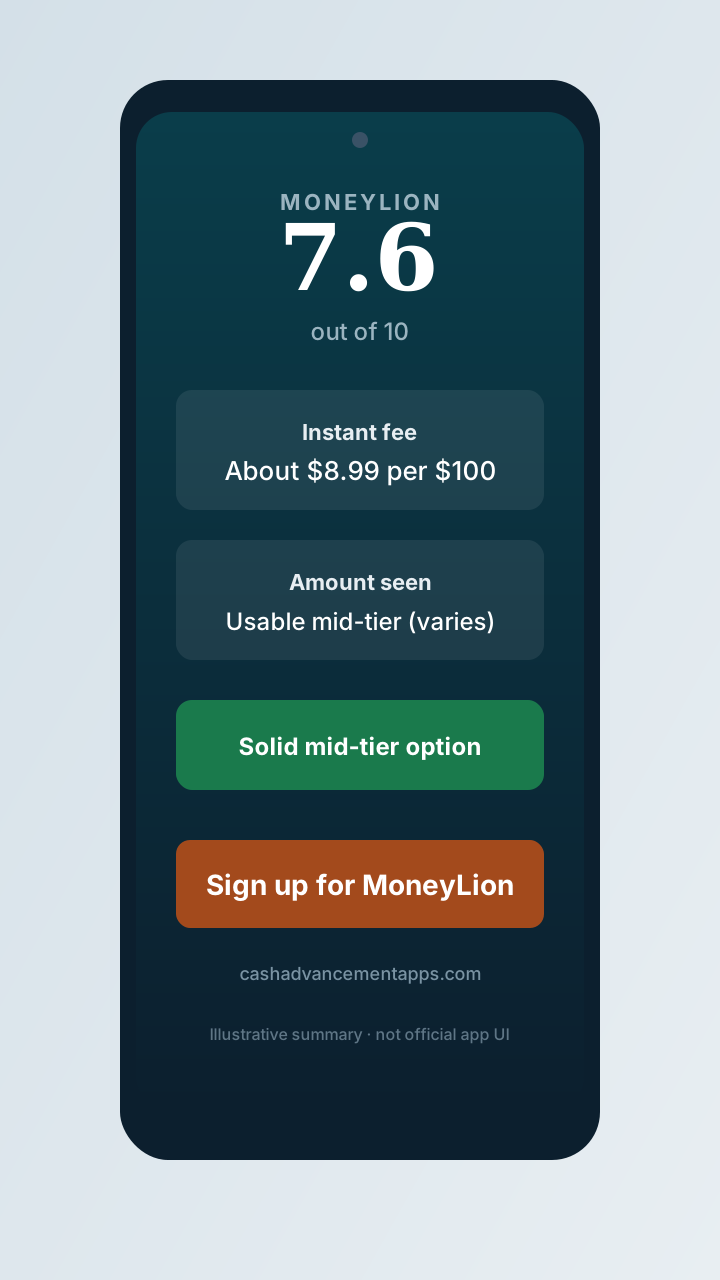
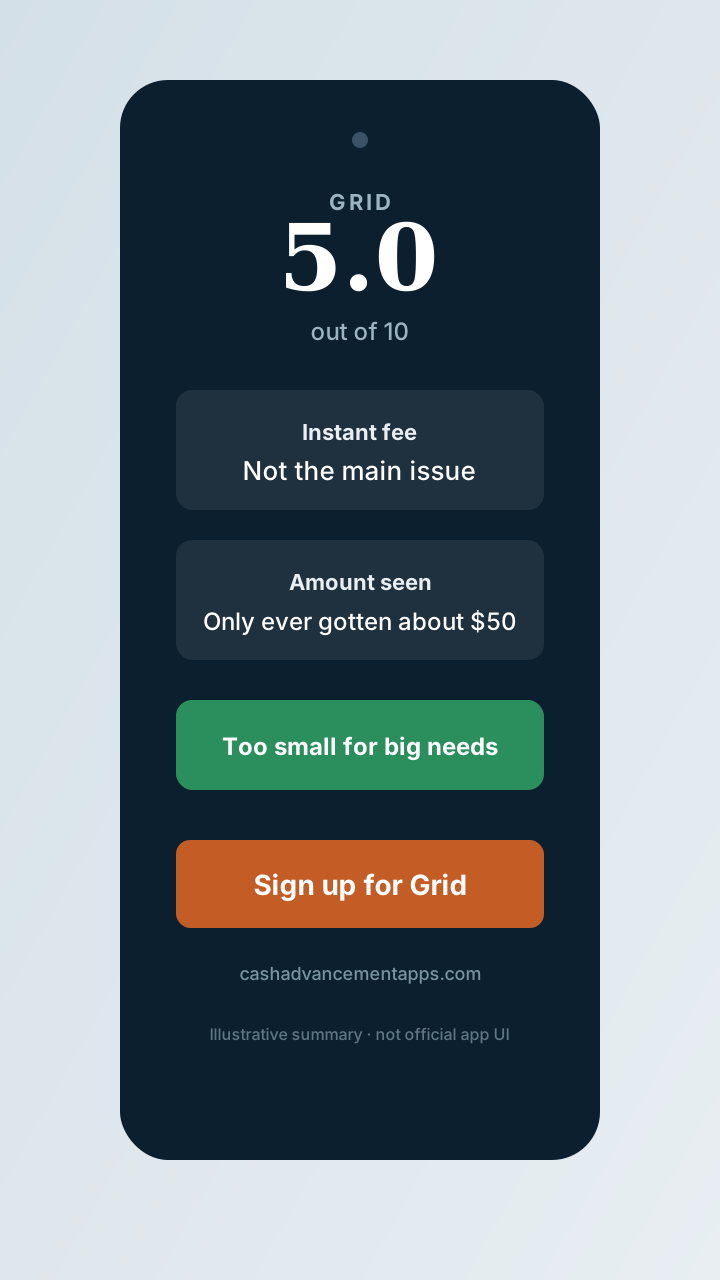
| Overall score | 7.6 / 10 | 5.0 / 10 | MoneyLion |
| Instant fee | About $8.99 per $100 | Not the main issue | Grid |
| Amount experience | Usable mid-tier (varies) | Only ever gotten about $50 | MoneyLion |
| Monthly / sub | Optional products / memberships may apply | Varies | Context-dependent |
| Instant transfer | Yes | Yes | See notes |
| Referral / bonus | Up to $55 with code $sumgrids | Sign up via my link | — |
| Best for | Predictable Instacash-style backup | Tiny bridge amounts only | — |
| Watch out | More expensive per $100 than EarnIn or Brigit | ~$50 advances do not solve most bill gaps | — |
| Full reviews | MoneyLion review | Grid review | — |

What each app is trying to be
MoneyLion: Predictable ~$8.99 per $100; fine backup, not the cheapest. Best for: Predictable Instacash-style backup. Watch out: More expensive per $100 than EarnIn or Brigit.
Grid: Product is fine; ~$50 advances have not helped large cash needs. Best for: Tiny bridge amounts only. Watch out: ~$50 advances do not solve most bill gaps.
That framing matters. Plenty of “vs” articles pretend every cash advance app competes for the same user. In reality, someone who needs a cheap $80 bridge is not shopping the same way as someone who needs ~$300 and will tolerate a monthly subscription.
Fees and monthly cost: the honest math
Grid wins the fee comparison in my notes.
MoneyLion fee pattern
Budget roughly $8.99 for each $100 advanced in my experience.
That is still in the usable zone — unlike Dave's near-$50 cashouts.
EarnIn at ~$3.99 remains the better everyday fee if the amount fits.
Monthly / subscription notes for MoneyLion: Optional products / memberships may apply. Always price the subscription into the advance if one exists — a “free” cashout that requires a $19.99 gate is not free.
Grid fee pattern
Fee is secondary to the amount problem — $50 simply may not be enough.
Monthly / subscription notes for Grid: Varies. Always price the subscription into the advance if one exists — a “free” cashout that requires a $19.99 gate is not free.
When I compare MoneyLion and Grid side by side, I convert everything into cost to get usable dollars into my real bank account today. That is why Albert-style internal hops and Dave-style split cashouts get punished even when the headline advance looks okay.
Advance amounts and what I actually received
MoneyLion has been stronger on usable advance size in my experience.
With MoneyLion, my amount experience is: Usable mid-tier (varies). With Grid, it is: Only ever gotten about $50. Your underwriting will differ because these products read deposit history, but repeated patterns still tell you which product tends to be stingy, generous, or capped.
MoneyLion amount notes
MoneyLion is not bad — just not my first open.
In my use they charge about $8.99 per $100 for Instacash-style access.
I reach for it when cheaper apps are capped out and I still need instant cash.
Grid amount notes
Grid feels fine as a product.
I have only ever gotten about $50.
For big cash needs, it has not helped.
Speed: instant cash vs friction
MoneyLion instant transfer status in my use: Yes. Grid: Yes.
If an app takes 1–2 days, it fails my primary use case. If an app is “instant” but routes through an intermediate balance, or splits one need into two cashouts with two fees, that is still a speed/fee failure even if the first notification looks fast.
How MoneyLion works in practice
- Sign up and link a bank account.
- MoneyLion underwrites an Instacash / advance limit from deposits.
- Pay the fee for faster delivery when you need money now.
- Repayment follows their disclosed schedule.
How Grid works in practice
- Connect your bank, review the offered amount, request instant cash if available.
Pros and cons at a glance
MoneyLion pros
- Predictable fee math
- Reliable enough as backup instant cash
MoneyLion cons
- More expensive than EarnIn/Brigit per dollar
- Product ecosystem can feel busy
Grid pros
- Product experience is okay
Grid cons
- ~$50 advances are too small
- Not useful for large shortfalls
Who should choose which app
Choose MoneyLion if...
- People who want a fourth source of instant cash with clear fee math.
- You specifically need: Predictable Instacash-style backup
Choose Grid if...
- People who only need a tiny bridge.
- You specifically need: Tiny bridge amounts only
Skip both (for this matchup) if...
- Your situation matches a MoneyLion skip reason: Fee-minimizers who can stay inside EarnIn/Brigit limits.
- Or a Grid skip reason: Anyone covering rent-sized gaps.
- You have not checked cheaper Top 5 options first — especially EarnIn for fee efficiency and Tilt for amount/price balance.
Real scenarios: which one I would open
Scenario A — I need about $80–$100 today with minimal fee damage. I compare both on fee_num style pain. Right now that usually favors the lower fee pattern between MoneyLion (About $8.99 per $100) and Grid (Not the main issue). I would lean Grid.
Scenario B — I need a larger single advance for a bill that is bigger than a tiny bridge. Amount experience matters more: MoneyLion (Usable mid-tier (varies)) vs Grid (Only ever gotten about $50). I would lean MoneyLion if the fee stays tolerable.
Scenario C — I am already stressed and hate complicated onboarding. Subscription-first and rewards-heavy flows lose. Gerald/Vola-style paywalls are automatic skips. Between MoneyLion and Grid, I punish whichever adds more steps before money moves.
Scenario D — I might use cash advances every month. Recurring users should optimize a stack, not a single loyalty relationship. My default stack is still EarnIn → Tilt → Brigit → MoneyLion → Credit Genie. This MoneyLion vs Grid page tells you which of the two deserves a slot if both are candidates.
Referral bonuses and support links
MoneyLion referral note: Up to $55 with code $sumgrids. Grid referral note: Sign up via my link. Every Sign up for … button goes through go/affiliates.js so you can update referral URLs in one place.
Referral links never change the ranking method. If an app is expensive or annoying, it still gets called expensive or annoying.
FAQ: MoneyLion vs Grid
Which is better overall, MoneyLion or Grid?
MoneyLion ranks higher in my personal scoring. Scores: MoneyLion 7.6/10, Grid 5.0/10.
Which has lower fees?
Grid has the better fee pattern in my notes (Not the main issue).
Which gives more cash?
MoneyLion has been stronger on amount (Usable mid-tier (varies)).
Are these payday loans?
Most market as cash advances or earned wage access. Fees and subscriptions can still get expensive. Use them as short bridges, not income.
Final verdict
If I could install only one of these two tomorrow, I would choose MoneyLion. That is not a brand endorsement — it is the score from living with both fee models and amount patterns month after month. Re-check live offers before you commit, because limits move. For deeper detail, read the full MoneyLion review and Grid review, or return to the cash advance app comparisons hub.
Related searches this page is meant to answer: MoneyLion vs Grid, Grid vs MoneyLion, MoneyLion or Grid for instant cash, MoneyLion fees vs Grid, and which cash advance app is cheaper.
Methodology and bias notes
Every comparison on Cash Advancement Apps uses the same lens: I need cash advances on a regular monthly cadence, I prioritize instant delivery, and I care about the net result after fees, subscriptions, and transfer friction. I do not award points for celebrity ads, cartoon mascots, or “up to $500” banners I never personally received.
For MoneyLion vs Grid specifically, I weighed score (7.6 vs 5.0), fee pattern, amount experience, monthly structure, and onboarding friction. If your bank deposits, state rules, or employment pattern differ, your offers can differ — treat this as a field guide, not a guarantee.
I will keep updating these pages as apps change cashout behavior (for example, split cashouts) or subscription gates. If you have a different experience, that can still be valid — underwriting is personalized — but the structural red flags (pay before estimate, near-$50 cashout fees, tiny $50 ceilings) are worth publishing clearly.
If you are building a multi-app stack, do not marry either MoneyLion or Grid. Pull the cheaper efficient option first, then the better amount option, then stop before you enter predatory fee territory. That discipline matters more than winning an internet argument about which logo is “best.”